
Starting a recovery journey isn’t just about putting distance between you and a substance. It’s about rebuilding the parts of life that fell apart along the way. That includes relationships, confidence, and your mental health. What many people don’t expect, though, is that one of the most effective tools for healing doesn’t come in a pill bottle or therapy room. It comes from movement.
We’re not talking about six-pack goals or marathon training. This is about getting your brain and body back in sync. Exercise, when done right and regularly, can play a powerful role in helping you think clearly, feel better, and stay sober.
You Can Feel the Mental Shift Sooner Than You Think
Go for a walk for just twenty minutes. Not for steps, not for calories. Just for you. Chances are, you’ll notice the difference by the time you get back.
According to psychologists at the APA, it only takes a few minutes of moderate movement to start boosting your mood. That quick win is huge when you’re dealing with withdrawal, fatigue, or emotional ups and downs.
But the short-term lift isn’t the whole story. One study from Duke University found that exercise helped people with major depression recover just as well as those on medication. After a year, those who kept exercising had significantly fewer depression symptoms than those who didn’t.
Add in better sleep, reduced stress hormones, and sharper thinking, and suddenly you’ve got a real case for building movement into everyday recovery life. Exercise is one of the simplest ways to support mental health, and it works almost immediately.
Movement as a Shield Against Relapse
Relapse isn’t just about willpower. It often shows up when stress, boredom, or cravings hit and there’s nothing healthy in place to deflect it. Exercise can be that deflection.
Take alcohol urges, for example. In a study involving people in early sobriety, just 10 minutes of moderate-intensity activity lowered their cravings while they exercised. Sure, the effects weren’t permanent, but in the world of recovery, even short breaks from cravings matter.
In a 12-week rehab program that included team workouts, strength training, and yoga, 91% of people who kept exercising stayed sober, compared to 50% who didn’t. That’s not a small difference.
This is why exercise and relapse prevention go hand in hand. It’s about giving your nervous system something steady and healthy to rely on when triggers hit.
Movement also helps restore control. Not just over your schedule, but over your body, your reactions, and your sense of agency.
How Exercise Affects the Brain During Addiction Recovery?

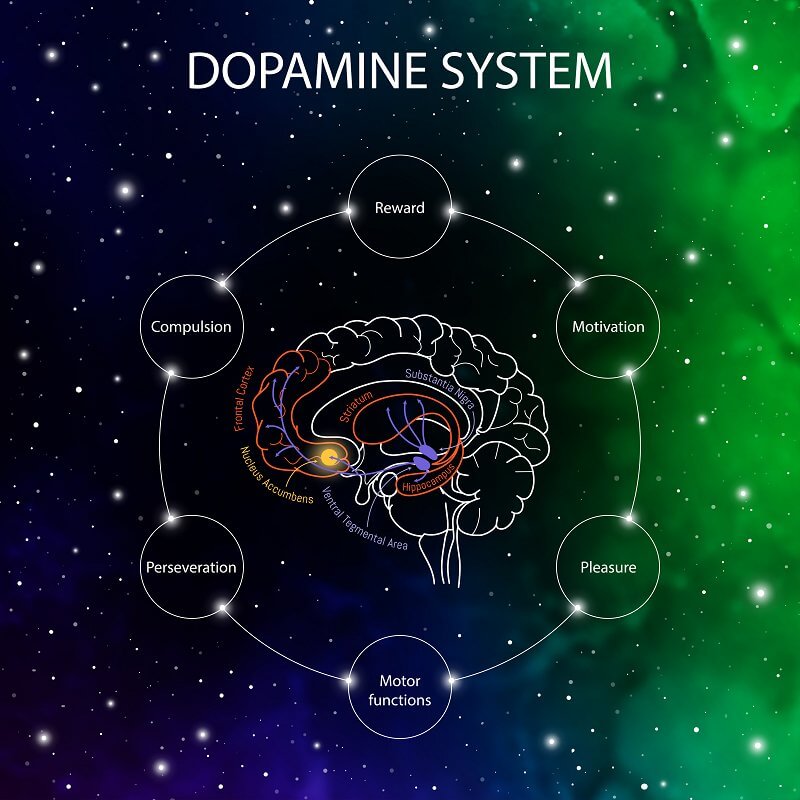
Dopamine is the neurotransmitter your brain releases when something feels rewarding. Drugs like opioids, cocaine, and alcohol hijack that system, flooding the brain and eventually desensitizing it. That’s part of why things feel flat or joyless after you quit. Your natural dopamine rhythms are out of sync.
Aerobic exercise, like walking, cycling, or swimming, can stimulate those same dopamine circuits, just in a safer, more sustainable way. A research team at the University at Buffalo found that daily aerobic exercise helped “normalize” dopamine signaling in animal models of addiction. That’s a big deal.
But dopamine isn’t the only player. Movement also boosts serotonin, endorphins, and even brain-derived neurotrophic factor (BDNF), a protein that encourages neuroplasticity and recovery.
In simple terms, exercise helps your brain rewire itself slowly but steadily. Through exercise, you’re rebuilding your brain’s ability to be better.
The Environment Also Matters
Physical activity and sobriety go further when the activity connects to the community.
Example programs like Tree House Recovery in California use group fitness as therapy. Clients practice communication, accountability, and stress response as a team. With methods like Action-Based Induction Therapy (ABIT) or Exercise as a Pathway to Healing (ESM), movement becomes a metaphor for growth.
Organizations like The Phoenix or the Boston Bulldogs Running Club also offer group runs, classes, and events for people in recovery. There’s something powerful about sweating through a challenge with others who get it. That kind of connection can be hard to find in early sobriety.
And then there’s outdoor exercise and mental health. Studies have found that people who walk or run outside experience bigger mood improvements and more motivation to keep going compared to those who exercise indoors. Nature seems to turn the dial up on the benefits.
What This Looks Like in Real Life
In that 12-week program we mentioned earlier, participants were regular people working through substance use. By the end, their strength had improved (bench press up 39%, deadlift up nearly 70%), but so had their coping skills and emotional stability.
In another example, a smoking cessation study in London tested vigorous aerobic workouts with women trying to quit. The result included less irritability, fewer cravings, and better mood throughout the program. Exercise fills in the gaps that often trip people up.
These stories are becoming more common as recovery programs evolve to include movement as a standard tool.
How to Start Exercising Safely in Early Recovery
You don’t need to do everything at once. If you’re new to movement or if your body’s been through a lot, start where you are.
A slow walk. Stretching. Basic yoga. Even 10 minutes count.
The mental health benefits of exercise are about consistency. You can build up over time. Some people thrive with structure, like scheduled gym time or group classes. Others prefer to move when the urge hits. Both are valid.
Tools that help:
- Apps that log mood alongside movement
- Pedometers or simple wearables
- Journaling about how you feel before and after
- Working with a therapist who understands exercise-based recovery
A Stronger Body, a Calmer Mind, a Clearer Path
Recovery is hard. But movement makes it just a bit easier to stay on track. It gives your recovery journey momentum.
It helps restore what addiction took away, including mental clarity, emotional regulation, confidence, and calm. Although it is not magic, it is close.
At American Treatment Network, we believe in building care around the whole person. That includes your brain, your heart, and your body. We incorporate movement-based strategies into our recovery support services.
If you’re ready to strengthen your recovery from the inside out, we’re here to help. Reach out to our team today to explore what recovery can look like.